

By using our website, you agree to the use of cookies as described in our Cookie Policy
When Do You Need a Jump Start in Neosho Instead of a Tow?
Most drivers think a dead battery is just a dead battery. Either the car starts or it doesn't. But there's more to it than that — and if you can't tell the difference, you're going to waste time, money, or both. A battery jump start solves one problem. A tow solves another. Knowing which one you're dealing with can mean the difference between being back on the road in five minutes or sitting in a shop for three days.
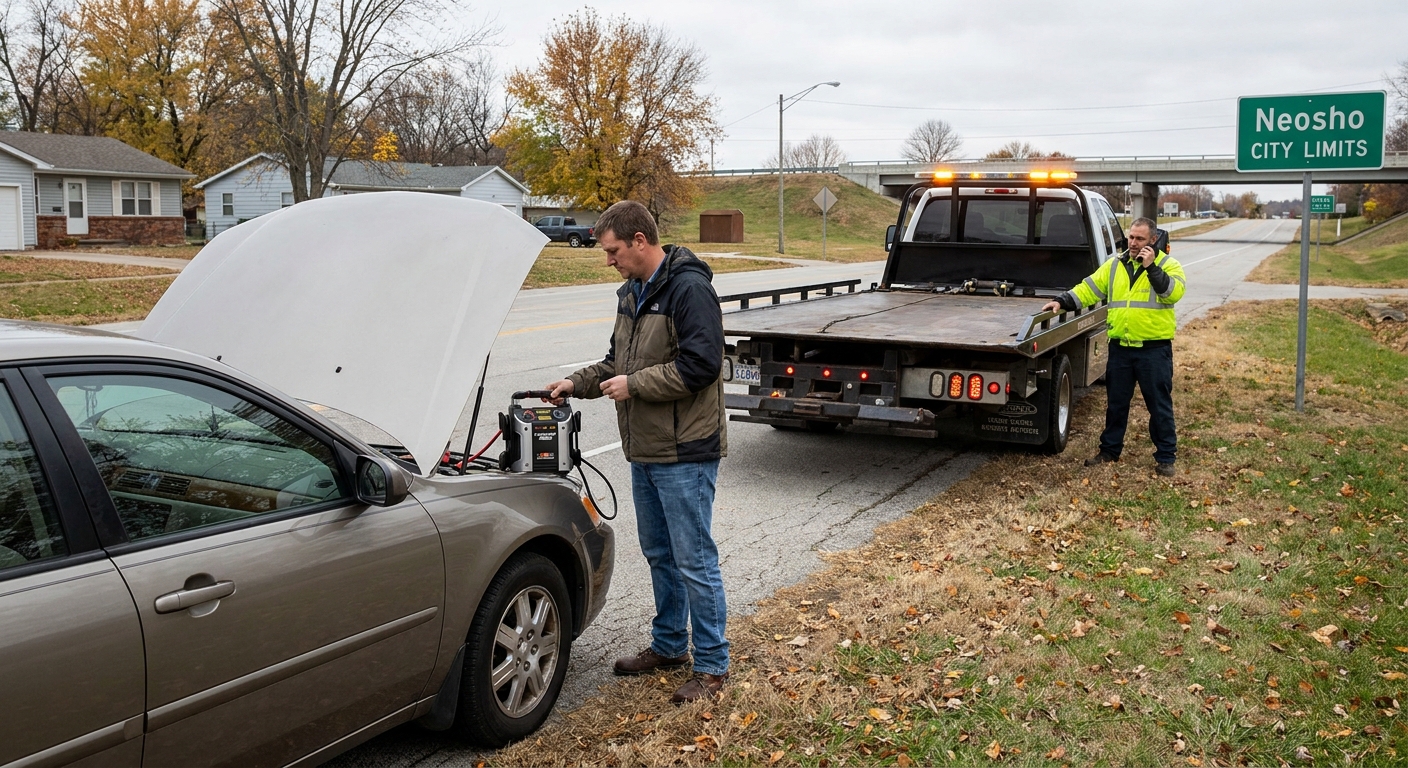
So here's what matters. If your vehicle won't turn over, you need to figure out why — fast. Is it just a drained battery, or is something else broken? Every symptom tells a story. Every decision you make should be based on what the car is actually showing you, not just what you hope is wrong.
A Dead Battery Doesn't Always Mean You're Stuck
Most of the time, when a car won't start in Neosho, it's the battery. You left the dome light on. The cold hit hard overnight. Or the battery's just old and finally gave up. That's not a mechanical failure — it's a power issue. And power issues get fixed with a jump.
But if that battery's been drained for a reason you can't explain? Or if it's happened three times this month? That's not normal wear. That's a charging system problem or a parasitic draw, and a jump start won't fix it. It'll get you to the next breakdown, which is why understanding what voltage reading should a car battery be matters.
What a Jump Start Actually Solves
A jump start works when the only thing wrong is that your battery doesn't have enough juice to crank the engine. Everything else — starter, alternator, fuel system — has to be functional. You're just giving the battery a boost so it can do its job.
Here's when a jump makes sense:
- The engine tries to turn over but can't finish the cycle
- Your dash lights are dim or barely visible
- You hear rapid clicking when you turn the key
- You left something electrical running and now the battery's flat
- Cold weather zapped your battery overnight
When the Problem Runs Deeper Than the Battery
If a jump doesn't work the first time, don't keep trying. That's not stubbornness — it's damage waiting to happen. A failed jump usually means the issue isn't the battery at all. Could be the starter. Could be the alternator. Could be a blown fuse or corroded cables.
And if you smell burning, hear grinding, or see smoke? Stop. Don't touch anything. That's not a dead battery — that's a system failure, and you need a tow before you turn a fixable problem into a total loss.
Red Flags That Mean You're Getting Towed
There are clear signs that tell you a jump won't cut it. Ignore them, and you'll end up paying for the jump and the tow.
- The car won't respond at all — no clicks, no lights, nothing
- It starts but dies immediately after you disconnect the cables
- You see visible damage to the battery terminals or casing
- There's a burning smell or visible smoke under the hood
- The engine cranks but won't catch, even with a fresh charge
How to Make the Call in the Moment
You don't need to be a mechanic to figure this out. You just need to pay attention. Did the car give you any warning signs before it died? Was it running rough, stalling, or showing dashboard lights? If yes, that's not battery failure — that's something mechanical, and you should know what causes a car to stall.
Did it work fine yesterday and now it won't start after sitting overnight in the cold? That's probably the battery. Try a jump. If it works and the car runs normally, you're good. If it doesn't, call for a tow and don't waste time guessing.
Why Towing Isn't Giving Up
Some drivers see a tow as defeat. It's not. It's smart. If your car has a deeper issue, driving it — or trying to jump it repeatedly — can cause more damage. Professional towing gets your vehicle to someone who can actually diagnose and fix the problem without making it worse.
Here's when you tow without hesitation:
- The jump didn't work after one solid attempt
- Your battery is cracked, leaking, or swollen
- You hear strange noises from the starter or engine
- The car starts but won't stay running
- You're stuck somewhere unsafe and need to move the vehicle now
What Happens If You Guess Wrong
Try to jump a car with a bad starter, and you'll just drain the other battery too. Try to drive a car with a failing alternator, and you'll stall out a mile down the road. Try to jump a battery that's leaking acid, and you might hurt yourself or fry the electrical system. You should also understand does jump starting a car damage the battery to avoid compounding problems.
Getting it wrong doesn't just cost you time. It costs you money, safety, and in some cases, the whole vehicle. So when you're not sure, don't gamble. A tow might feel like overkill, but it's a lot cheaper than a new engine or a trip to the ER.
Cold Weather Changes the Math
Neosho winters can be brutal on batteries. Cold slows down the chemical reactions inside the battery, which means less power available to start the engine. A battery that's fine in July might be borderline in December — and dead in January.
If it's freezing and your car won't start, a jump is worth trying. But if the battery's more than three or four years old, don't be surprised if it won't hold a charge. You might get one start out of it, but you'll be back in the same spot tomorrow morning.
Documentation Saves You From Confusion Later
If you're calling roadside assistance or filing a claim, keep track of what happened. Write down the symptoms, what you tried, and what the result was. That information helps the tow driver or mechanic figure out what's wrong faster — and it protects you if there's any dispute about what service you actually needed.
Here's what to note:
- Exact symptoms when you tried to start the car
- Any dashboard warning lights that were on
- Whether the jump worked, failed, or caused new issues
- How old the battery is and when it was last replaced
- Any recent repairs or electrical problems
Don't Wait Until You're Stranded to Think About This
A jump start in Neosho works when the problem is simple and the battery just needs help. Professional roadside services including towing work when the problem is real and trying to fix it yourself will only make it worse. Learn the difference, trust your gut, and don't be afraid to call in the right help when you need it.
The time to figure out your plan is before you need it. Know who to call for a jump. Know who to call for a tow. Keep jumper cables in your trunk. Check your battery every fall. And if your car's been acting weird — slow starts, flickering lights, random stalls — get it looked at before it leaves you stuck.
Let’s Get You Back on the Road
We know how stressful it is to be stuck with a car that won’t start, especially when you’re not sure if you need a jump or a tow. Let’s take the guesswork out of it together—call us at 417-609-2044 and we’ll get you moving again. When you’re ready for fast, reliable help, get roadside assistance and let’s get you safely back behind the wheel.
‹ Back
Recent Posts
-
When Do You Need a Jump Start in Neosho Instead of a Tow?
October 5, 2026
-
Can a Tow Truck in Carthage Move Your Car Without Damage?
September 21, 2026
-
When Should You Call for a Winch Out Service in Neosho?
September 7, 2026
-
Do You Need Roadside Assistance in Carthage or a Tow Truck?
August 24, 2026
-
How Towing Works After an Accident in Joplin
August 10, 2026