

By using our website, you agree to the use of cookies as described in our Cookie Policy
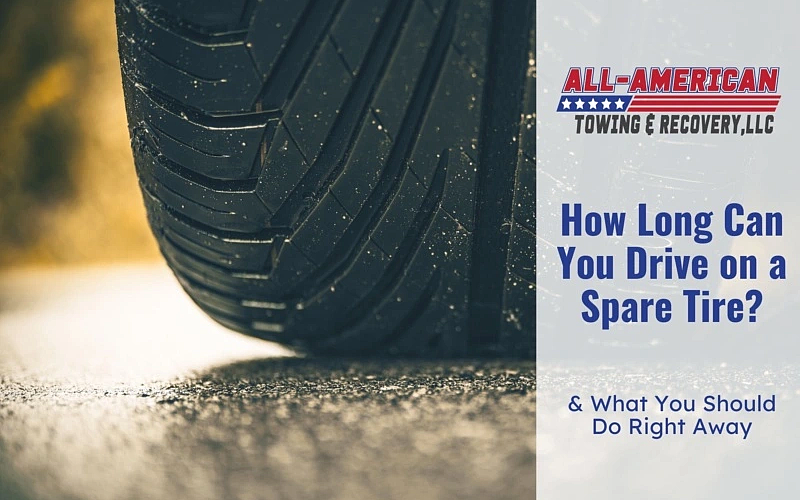
How Long Can You Drive on a Spare Tire?
You're cruising down the highway when you feel that unmistakable thump-thump-thump. You've got a flat. You swap on the spare, breathe a sigh of relief, and hit the road again — but now what? How long can you drive on that spare tire before it becomes a problem?
The answer depends on what kind of spare you're working with, and it matters more than most drivers realize.
Not All Spare Tires Are Created Equal
There are two main types of spare tires you're likely to find in your trunk:
The Compact Spare (Donut): This is the small, narrow tire that comes standard in most passenger vehicles. It's lightweight and space-saving, but it's not built for long-term use. Most manufacturers recommend driving no more than 50 miles on a compact spare and keeping your speed under 50 mph. Think of it as a temporary bridge, not a permanent solution.
The Full-Size Spare: Some trucks and SUVs come equipped with a full-size matching spare. If yours is the same size and type as your regular tires, you have a little more flexibility. You can drive on it at normal speeds for longer distances, though it's still a good idea to get your flat repaired or replaced as soon as possible.
Why the Donut Has Strict Limits
That spare donut isn't built to the same durability as your standard tires. It has a thinner tread, a smaller contact patch with the road, and it isn't designed to handle the stress of everyday highway driving. Pushing past those 50-mile and 50-mph limits puts you at serious risk of a blowout, which is far more dangerous than the original flat.
Driving on a compact spare for too long can also strain your vehicle's drivetrain and transmission, especially in all-wheel-drive vehicles, where all four tires must match in size and rotation speed.
What You Should Do Right Away
Once you're rolling on a spare, your top priority is getting to a tire shop. Here's a quick checklist to keep in mind:
- Check the spare's pressure before driving (most should inflate to around 60 PSI)
- Avoid highways if possible and stick to surface roads
- Skip the towing capacity — don't haul a trailer on a spare
- Get your flat repaired or replaced the same day if you can
Get Back on the Road Safely
Sometimes the situation is more serious — maybe you don't have a way to switch out the tire, the damage to your vehicle goes beyond the tire, or you're stranded somewhere unsafe. That's when it's time to call for professional help and avoid risking further damage from an unreliable setup.
Whether you're dealing with a blowout, a dead battery, or a vehicle that won't move, having a reliable towing service in your contacts can turn a stressful situation into a manageable one.
Don't let a flat tire or an overextended spare put you or your passengers at risk. All American Towing and Recovery is available 24/7 for roadside assistance and proudly serves drivers in Joplin, Carthage, Webb City, Neosho, and the surrounding communities in southwest Missouri. When you need car towing near you fast, we're the team to call.
‹ Back
Recent Posts
-
How Long Can You Drive on a Spare Tire?
February 25, 2026
-
What Voltage Reading Should a Car Battery Be?
January 23, 2026
-
Does Jump Starting a Car Damage the Battery?
December 19, 2025
-
What's the Difference Between Stalling Out and Dying?
December 17, 2025
-
Why Is My Battery Light On In My Car? Troubleshooting & Solutions
November 19, 2025